
Why etcd breaks at scale in Kubernetes
February 2026
This is part 3 of 6 of the How the Kubernetes control plane works. More
You might use Kubernetes for years without ever needing to think about etcd.
But as your cluster gets bigger, the control plane's limits start to surface — and etcd is often the first place people look.
How does etcd fit into the Kubernetes control plane?
What are its real limits, and what's actually the bottleneck?
And how did teams running the largest Kubernetes clusters push past those limits?
From one control plane to many
In Kubernetes, only the API server communicates directly with etcd.
The scheduler, controller manager, kubelet, kubectl, and your operators all communicate with Kubernetes via the API server.
Only the API server reads and writes directly to the database.
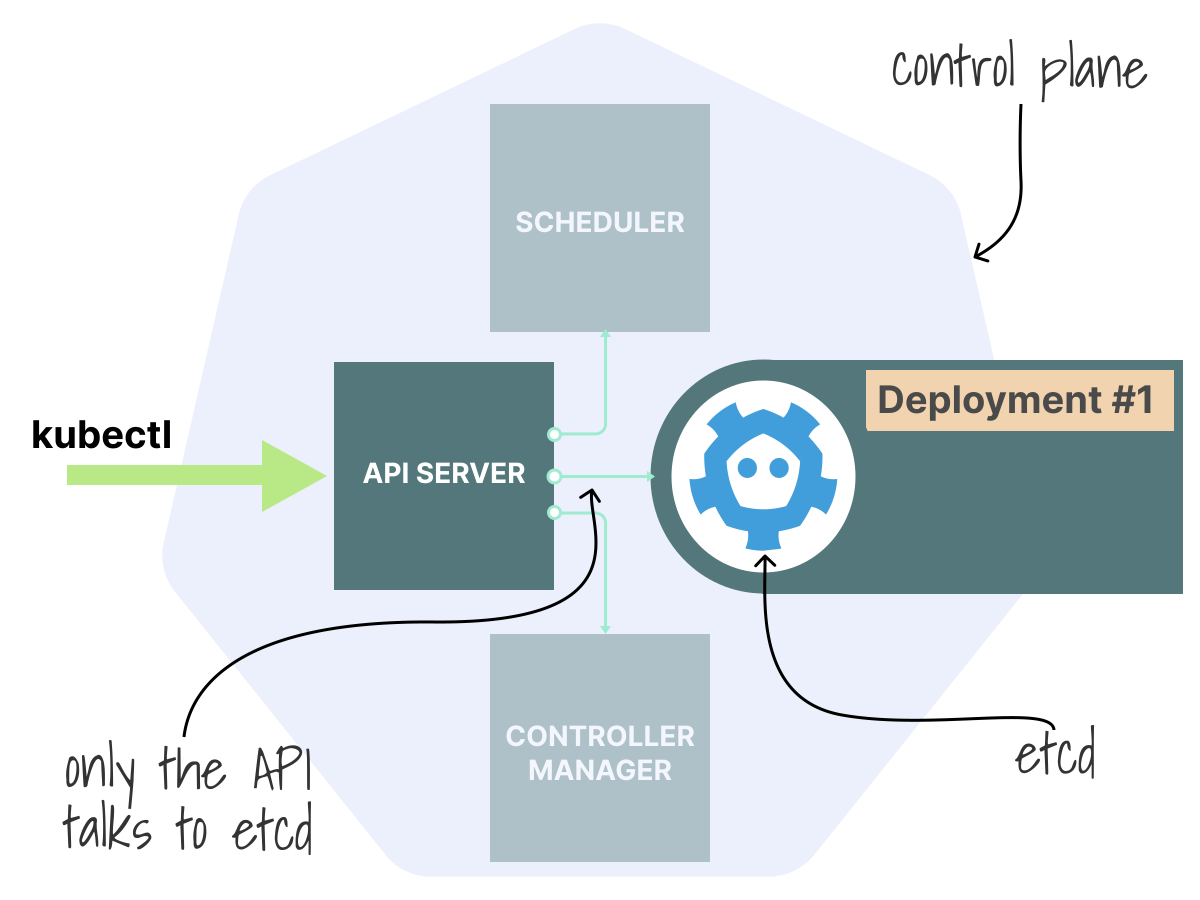
etcd is the API server's private backend. Everything else interacts with Kubernetes through the API.
So, do you really need etcd?
If you have only one API server on a single machine, you don't need etcd.
You could keep your cluster state in SQLite, PostgreSQL, or even a simple file on disk.
The API server would read and write to it, and everything would work fine.
So why use etcd at all?
Because production clusters need high availability, and that means running multiple API servers.
If one API server crashes or needs maintenance, another can take over so the cluster keeps running.
But this setup introduces a new problem.
If you have three API servers, they all need to read and write the same data.
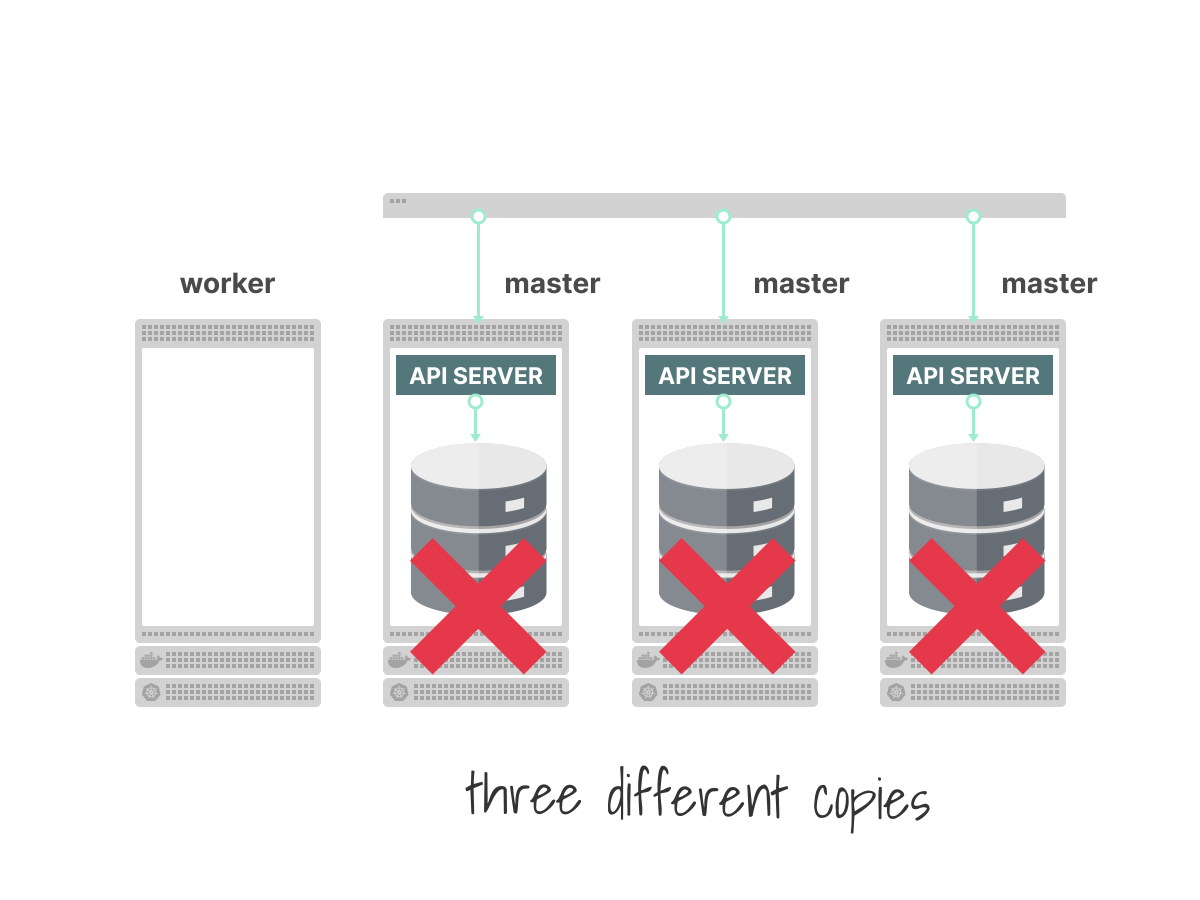
You can't give each API server its own database, or they'd end up with different views of the cluster's state.
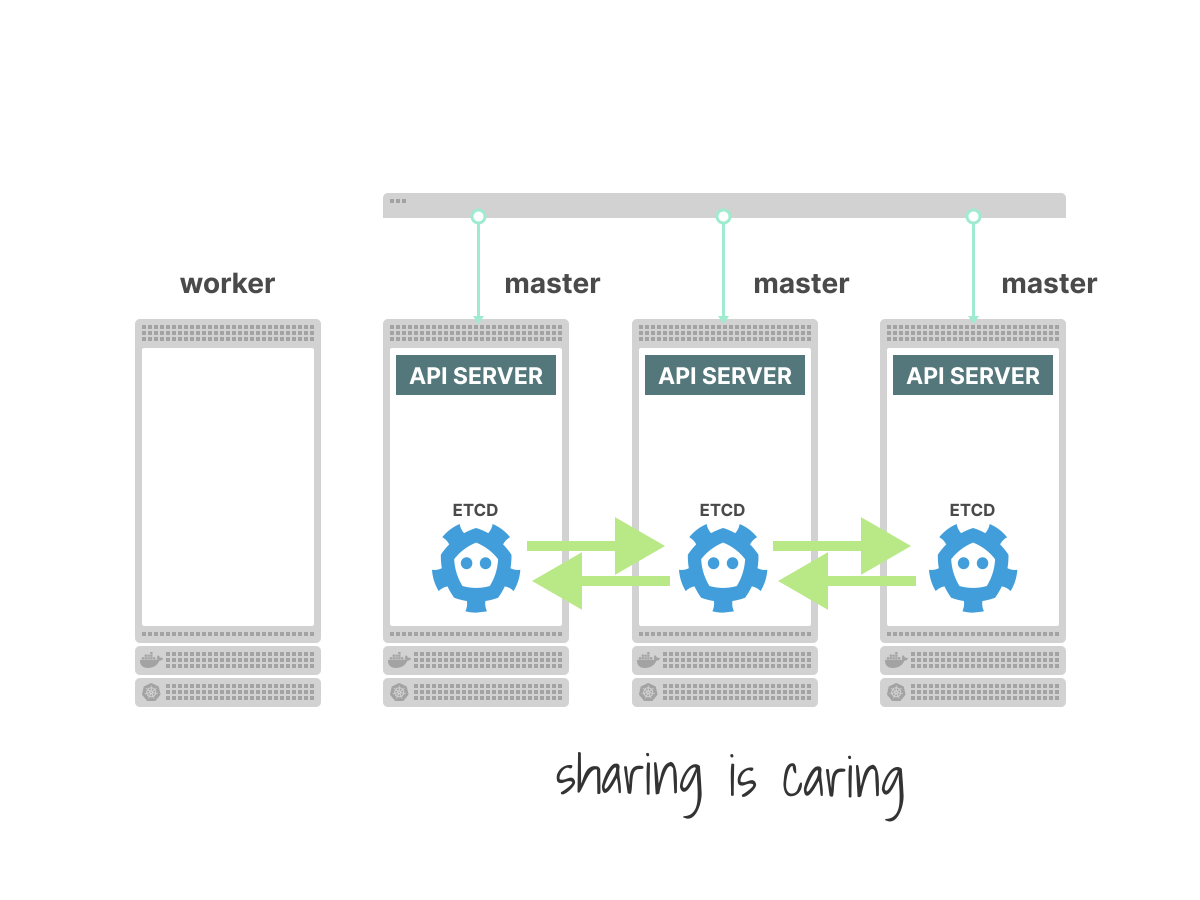
You need a shared database that all API servers can use, and it must stay consistent even if something goes wrong.
What does "consistent" mean here?
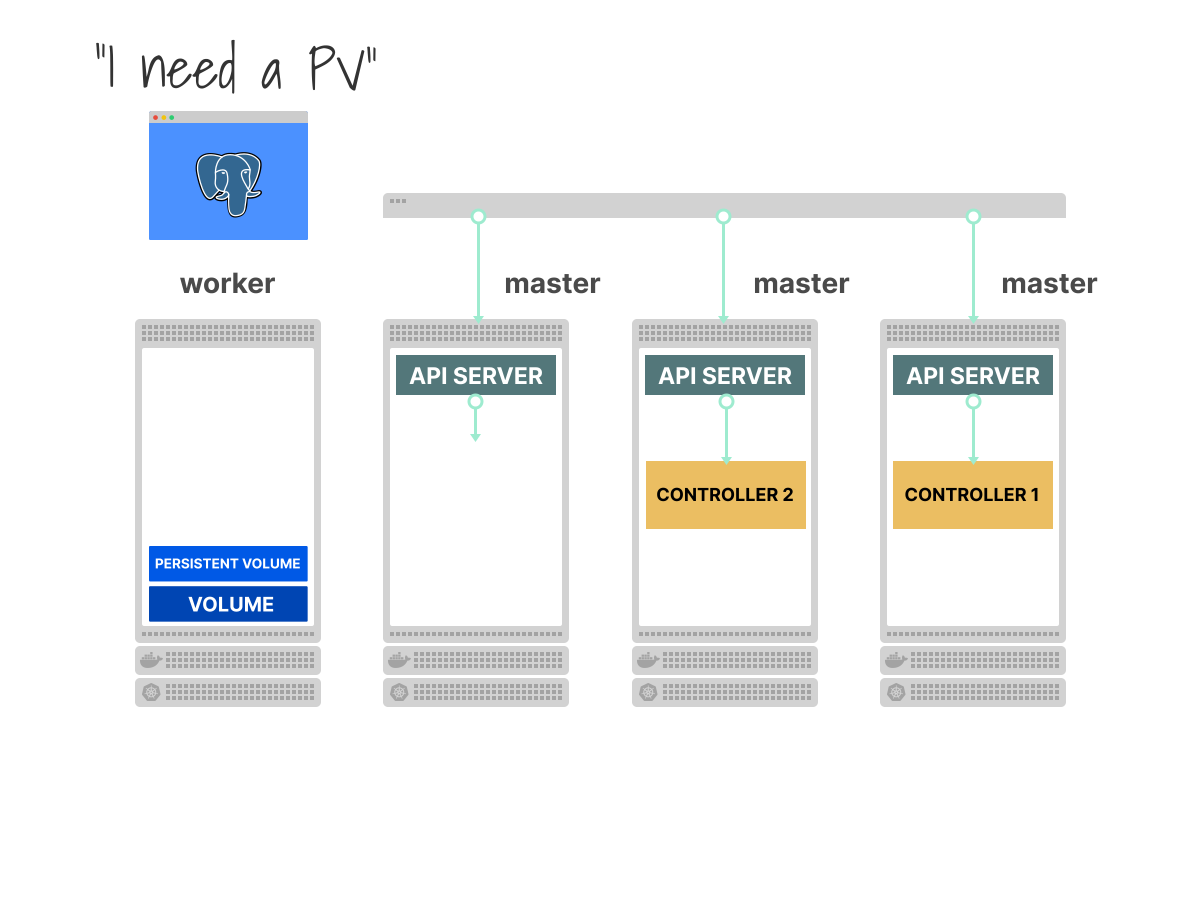
Picture a PersistentVolume that's available in your cluster.
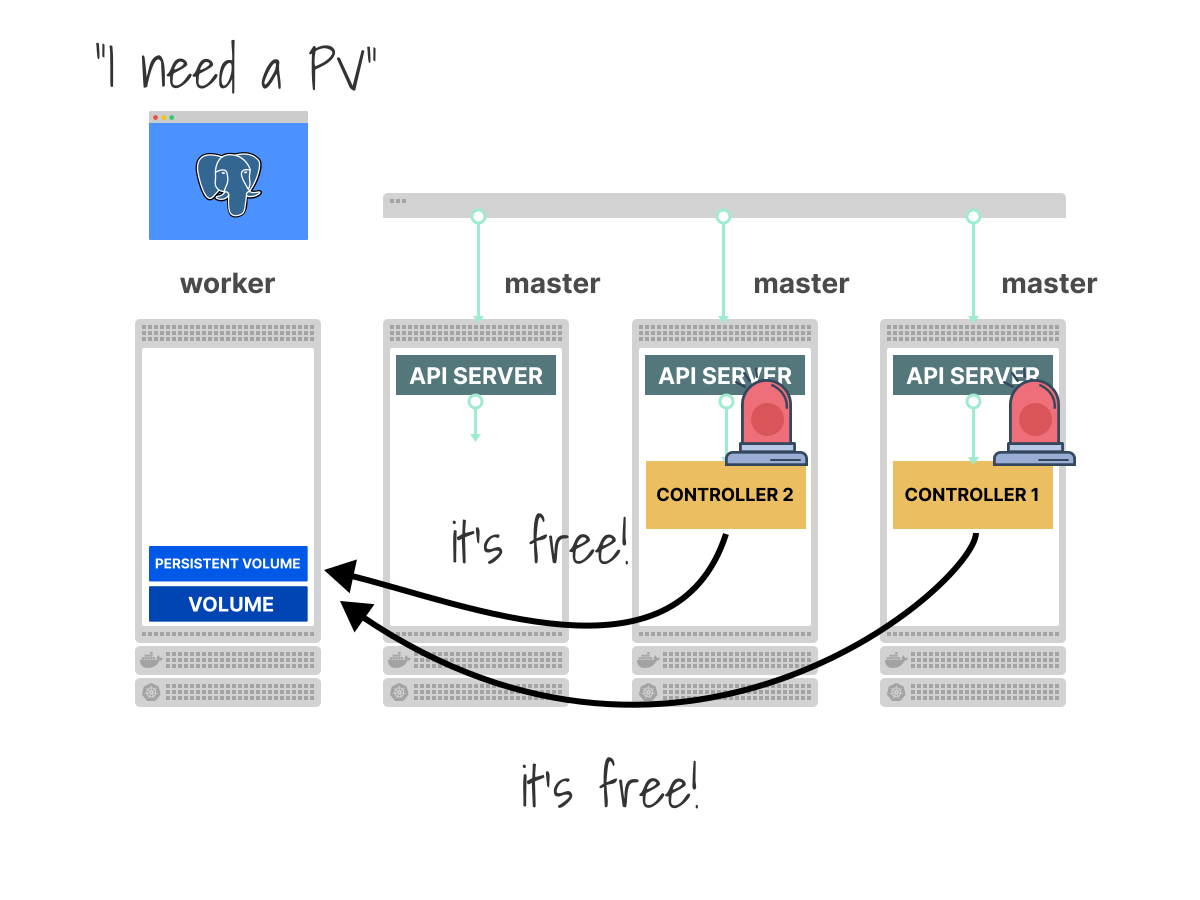
Two controllers, each connected to a different API server, both see that it's free.
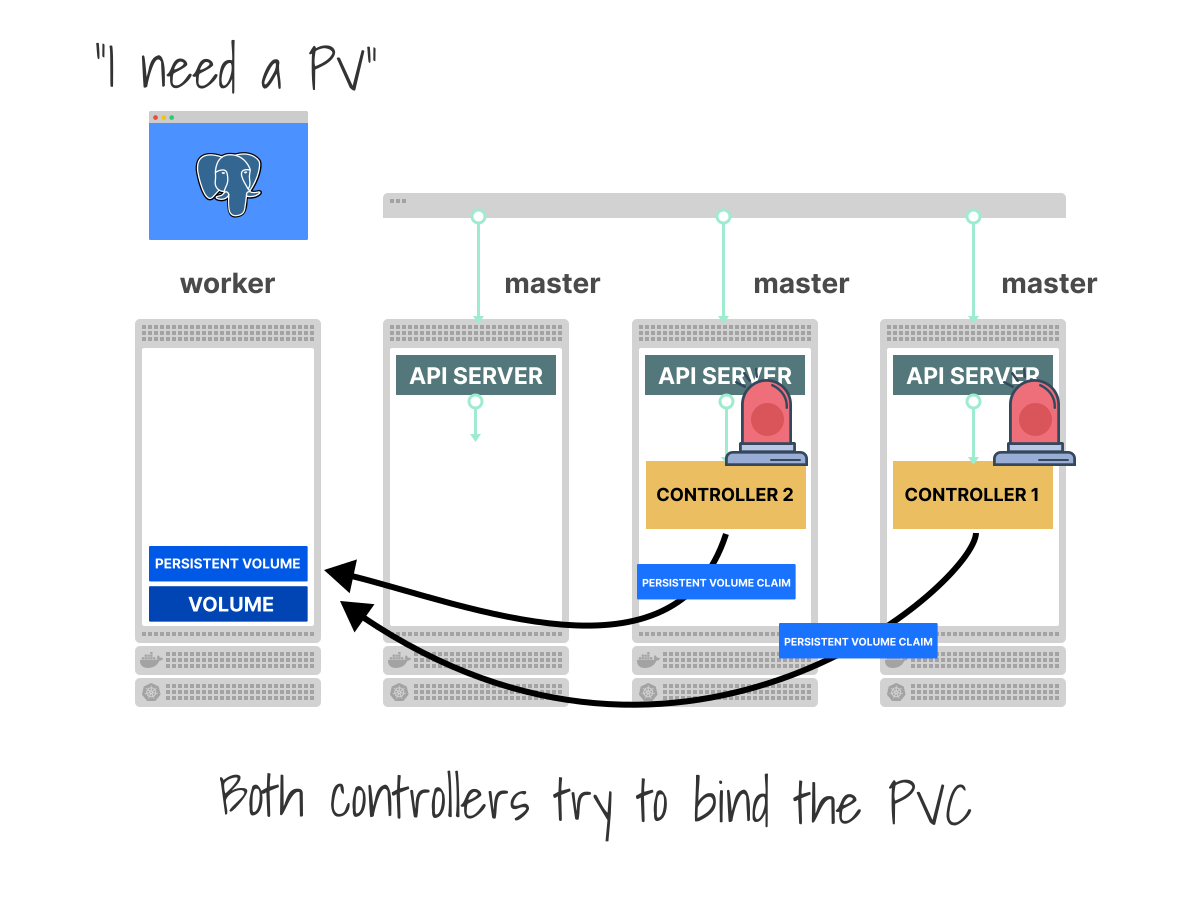
Both try to bind it to different PersistentVolumeClaims simultaneously.
Without consistency, both writes could succeed, and two pods could end up thinking they own the same disk.
This is exactly the kind of problem that etcd solves.
etcd is a distributed key-value store that uses the Raft consensus algorithm to keep multiple nodes in sync.
 1/3
1/3A worker asks for a persistent volume while two controllers on different API servers are present in the control plane.
 2/3
2/3Both controllers observe the same volume as available and race to claim it at the same time.
 3/3
3/3Both controllers attempt to bind their persistent volume claims to the same persistent volume, illustrating a consistency conflict.
How does Raft work?
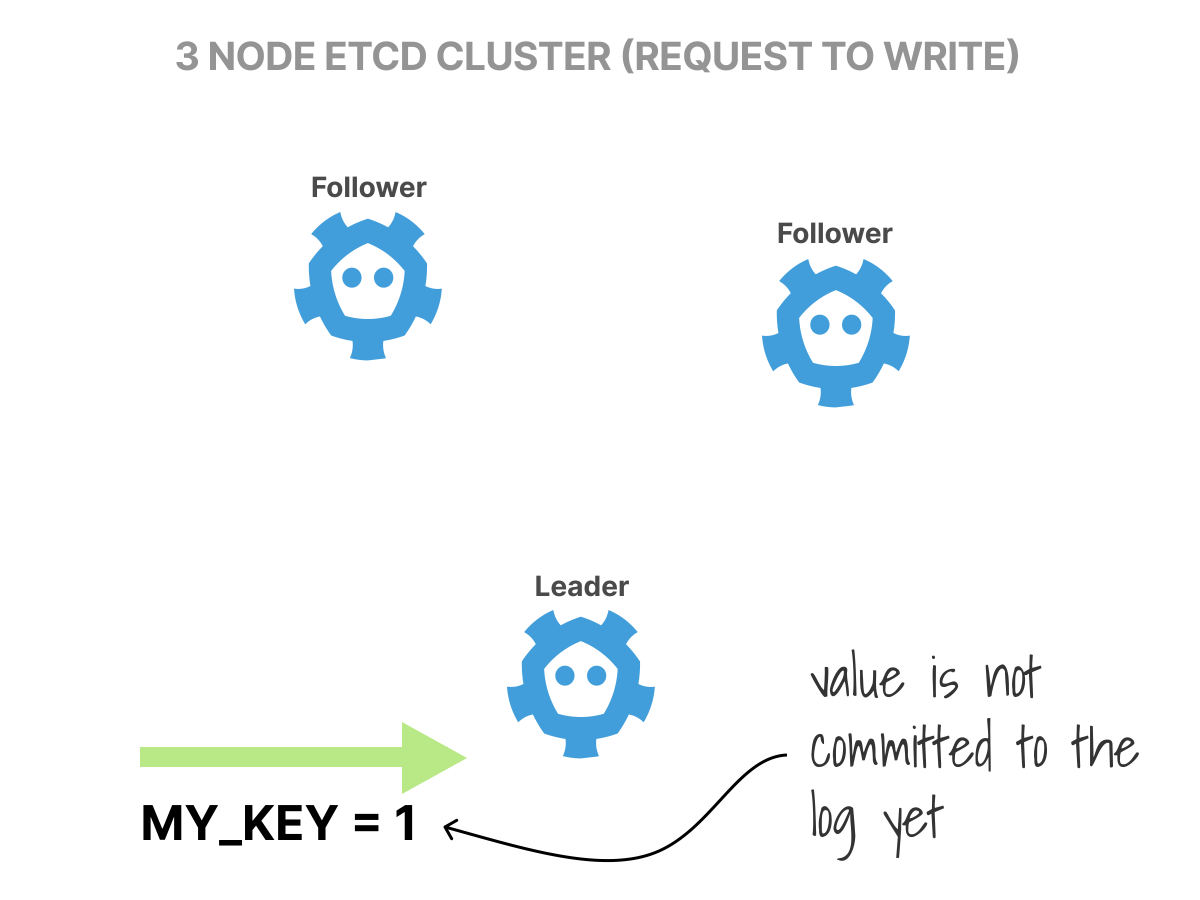
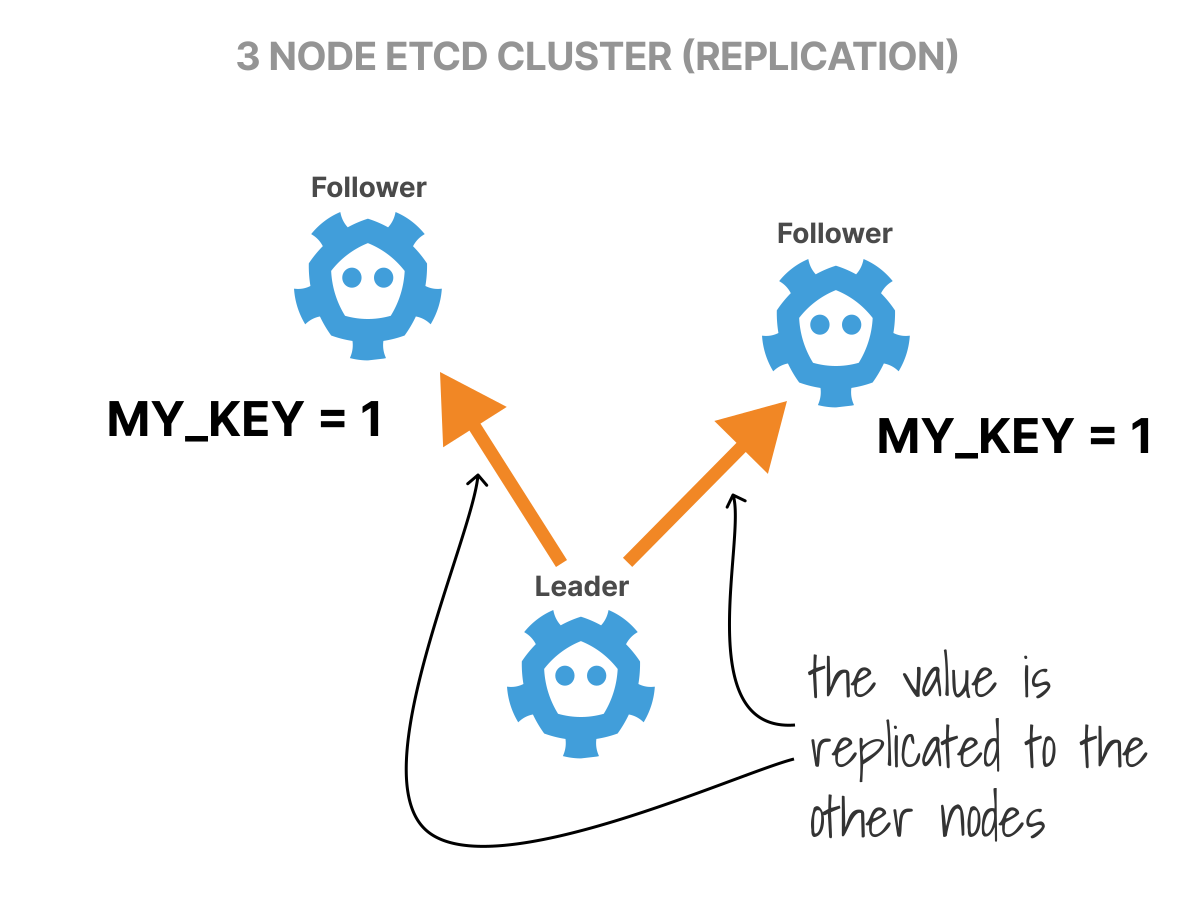
An etcd cluster elects a single leader node and all writes go to the leader.
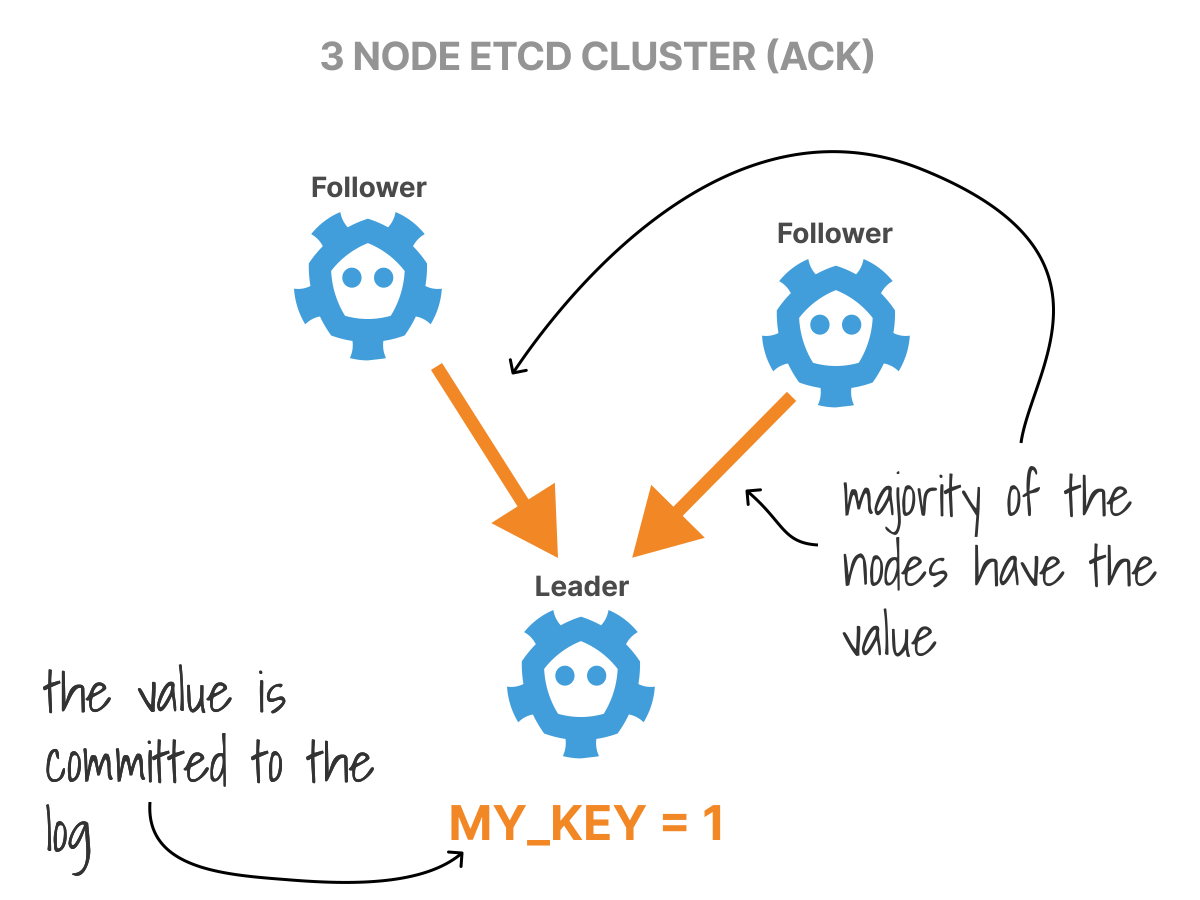
The leader appends the write to its log, replicates it to the follower nodes, and only commits the write once a majority of nodes confirm they've persisted it.
If the leader crashes, the remaining nodes hold an election and pick a new leader.
As long as most nodes are online, the cluster continues to function.
This setup gives you two main benefits:
- Strong consistency, all clients always see the same data.
- High availability, the cluster survives node failures.
This guarantee enables you to run multiple API servers.
 1/3
1/3A client sends a write to the leader in a three-node etcd cluster; the value is received but not committed yet.
 2/3
2/3The leader replicates the new key-value entry to both follower nodes.
 3/3
3/3Followers acknowledge the replicated value and, after majority confirmation, the leader commits it to the log.
If you want to see Raft in action, including how to build and break a multi-node etcd cluster yourself, check out How etcd works with and without Kubernetes.
But consensus comes with costs, and that's where problems can begin.
The costs of consensus
etcd provides strong consistency, but the design choices that enable it also limit its scalability.
In a Raft cluster, there's always exactly one leader.
Every write request, regardless of which node receives it, is sent to the leader.
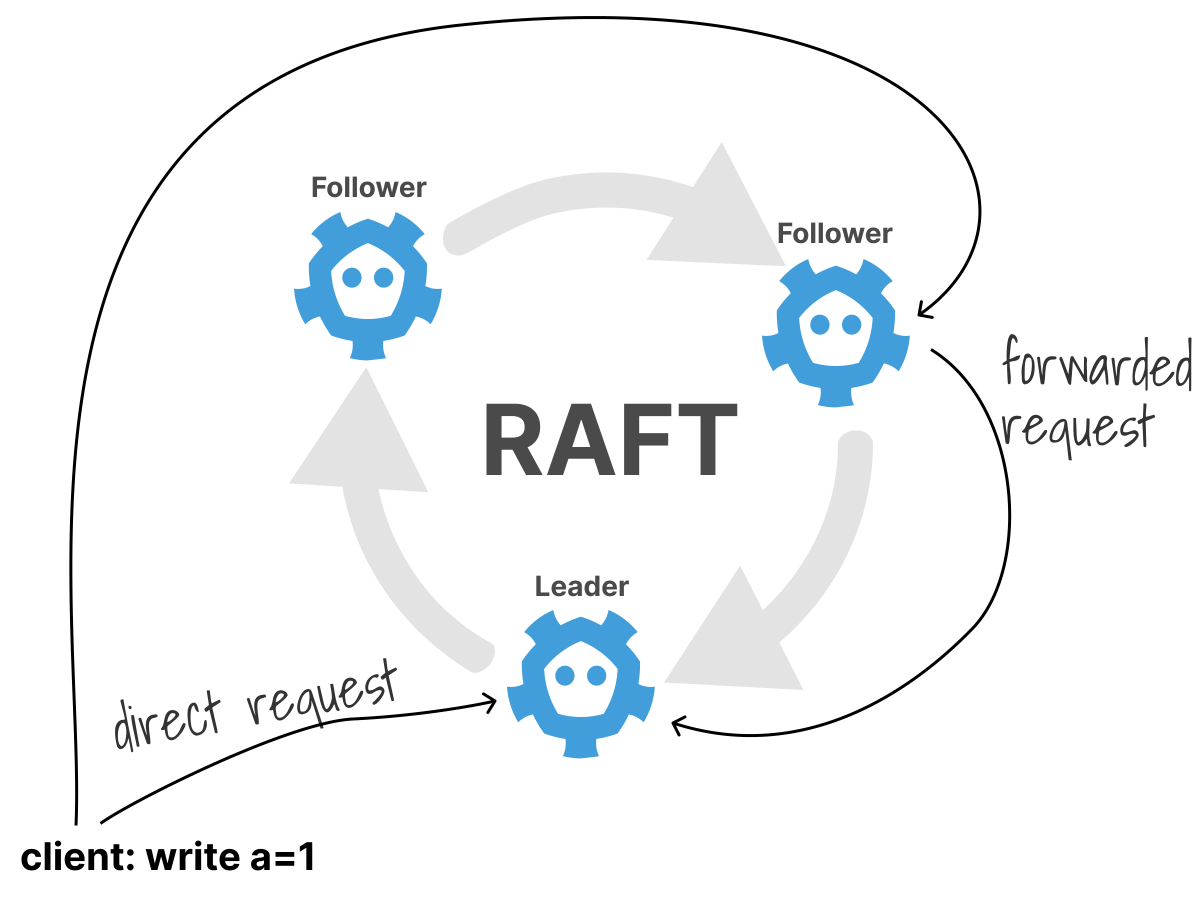
The leader appends the write to its log, sends it to the follower nodes, and waits for a majority to confirm they've persisted it before committing.
What does this look like in practice?
This means every write takes at least one network round-trip to the followers, plus a disk fsync on each node.
It also means that write throughput is limited by what a single node can handle.
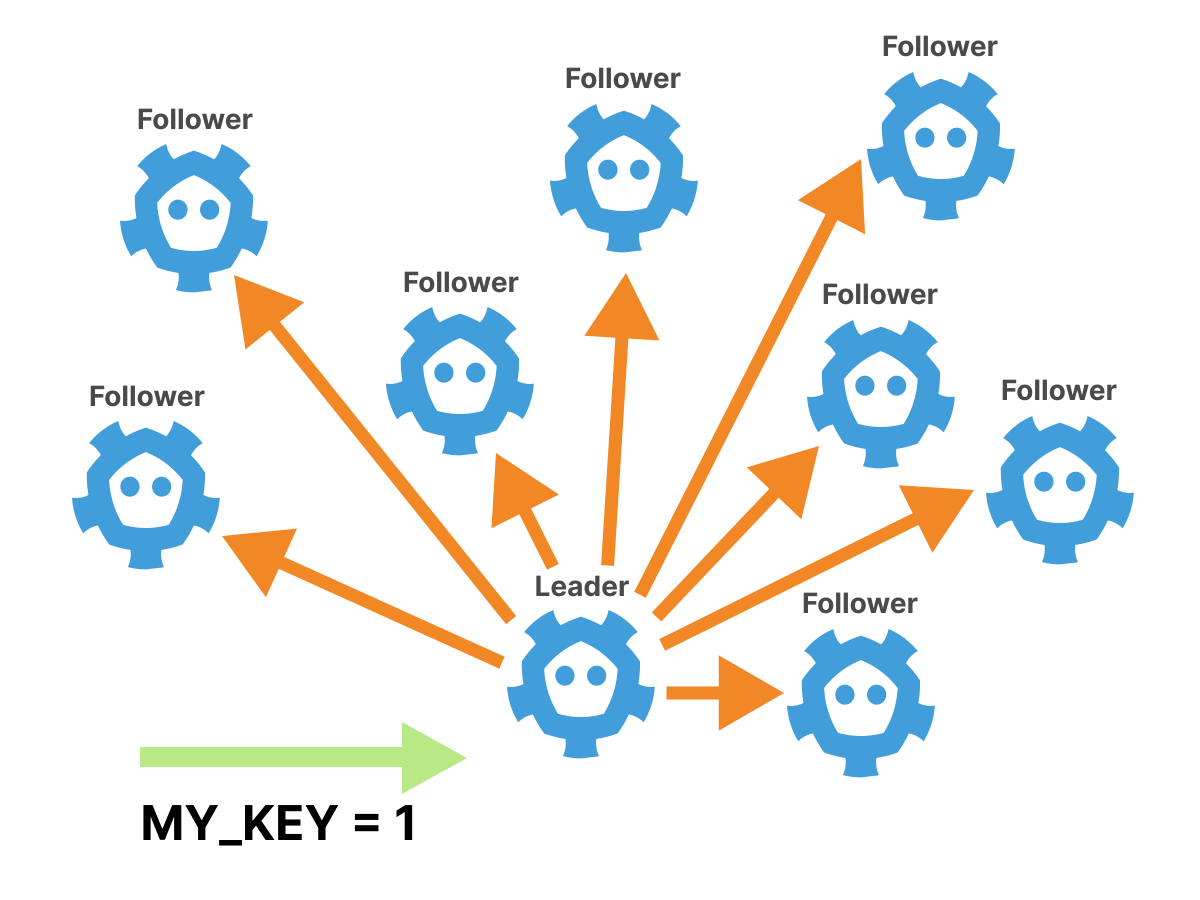
Adding more etcd nodes doesn't increase the number of writes you can handle.
In fact, it can make things worse because the leader has to replicate data to even more followers.
This is the main trade-off: you can't scale writes horizontally in a Raft cluster.
For a typical Kubernetes cluster, this is fine: the API server writes metadata: pod specs, deployment definitions, and config maps.
These writes are small and don't happen very often.
But in a cluster with tens of thousands of constantly changing objects, a single leader quickly becomes a bottleneck.
The database lives in a single file
etcd stores all its data in bbolt, a B+ tree key-value store backed by a single file on disk.
The etcd documentation lists a suggested maximum database size of 8 GiB, and the default backend quota is just 2 GiB.
For reference, GKE caps etcd at 6 GiB for standard clusters and replaces it entirely with Spanner for ultra-large ones.
Each request is limited to 1.5 MiB, and each key-value pair is limited to 1 MiB.
This means that a single Kubernetes object, such as a Secret, ConfigMap, or CRD instance, can't exceed 1 MiB when serialized.
If you've ever wondered why large ConfigMaps or Secrets get rejected, this is the limit they run into.
Why are these limits so strict?
Because Raft replicates everything.
When a follower falls too far behind (or a new node joins), the leader has to send it a full snapshot of the database.
If the database is several gigabytes, the snapshot will be just as large.
The bigger the database, the longer snapshots take, the slower recovery becomes, and the more likely it is that something could go wrong during the transfer.
The database size limit is not arbitrary. It comes directly from how Raft manages replication and recovery.
For most Kubernetes metadata, such as pod specs, service definitions, and config maps, a few gigabytes is usually plenty.
But if you add CRDs, large secrets, lots of namespaces, and high churn, you can start to hit that limit.
Every mutation creates a new revision
etcd uses multiversion concurrency control (MVCC).
Every time you write a key, etcd doesn't overwrite the old value: it creates a new revision of the entire dataset.
This is how resourceVersion works in Kubernetes.
Every object has a revision number, and controllers use it to watch for changes, resume watches after restarts, and detect conflicts during updates.
It's also the mechanism that makes rollbacks possible: Kubernetes can look back at previous revisions to know what changed.
But old revisions don't go away on their own.
Each write adds another revision.
If you have 10,000 pods and each gets updated once a minute, that's 10,000 new revisions every minute, piling up in the database.
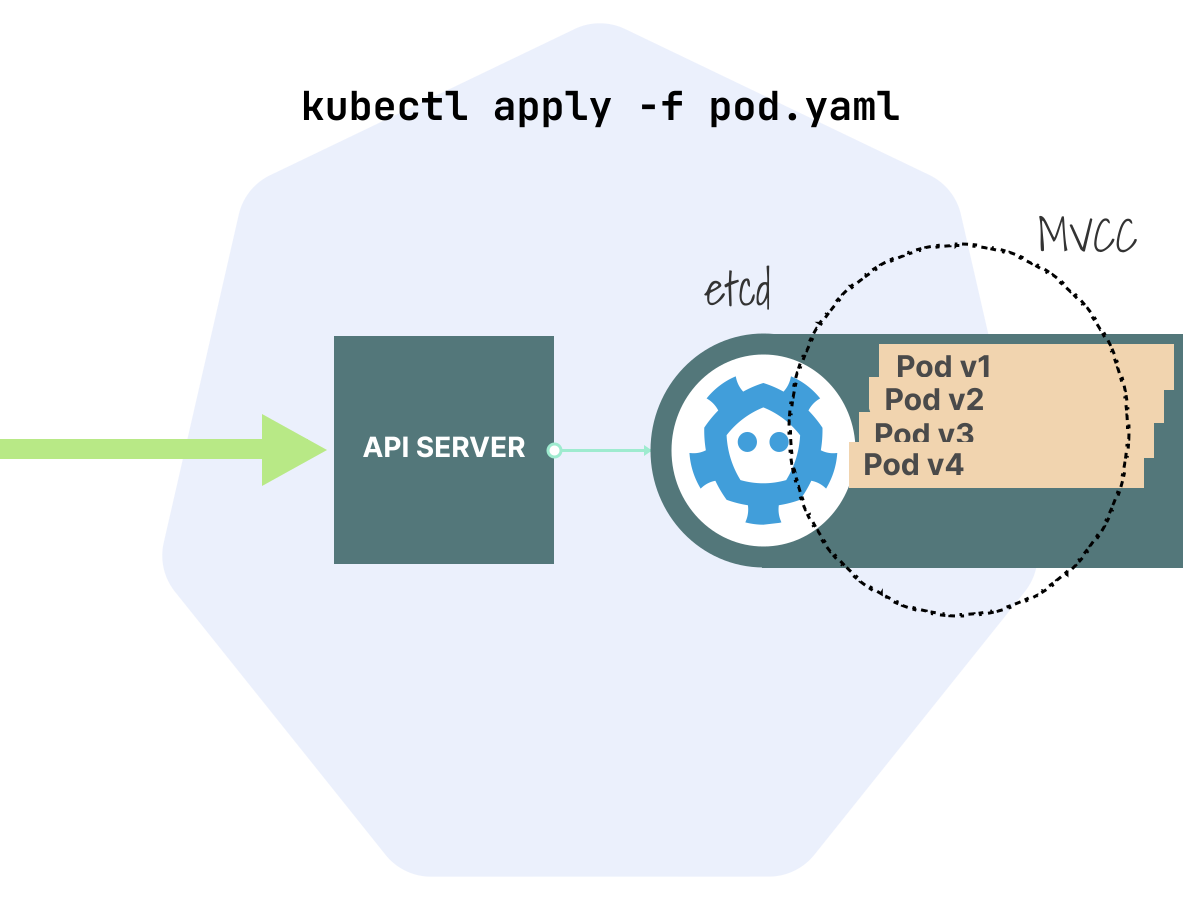
This is why etcd requires compaction.
Compaction tells etcd to discard all revisions older than a certain point.
Without it, the database grows monotonically regardless of how many keys you actually have.
Even after compaction, the space isn't freed right away.
bbolt uses copy-on-write pages internally: when a page is freed, the space is marked as reusable, but the file doesn't shrink.
This is why etcd also requires defragmentation: a separate operation that rebuilds the database file to reclaim the freed space.
If compaction can't keep up with how fast data changes, the database grows faster than you can shrink it. Eventually, it hits the backend quota.
When it reaches the quota, etcd enters alarm mode and won't accept any further writes until you free up space.
This means your whole Kubernetes control plane stops accepting changes.
No new pods, no scaling, and no deployments can happen.
Watch events and the API server
Kubernetes controllers don't poll the API server.
They open long-lasting watch connections and get events as objects change.
Under the hood, the API server maintains watch connections to etcd — but not one per client.
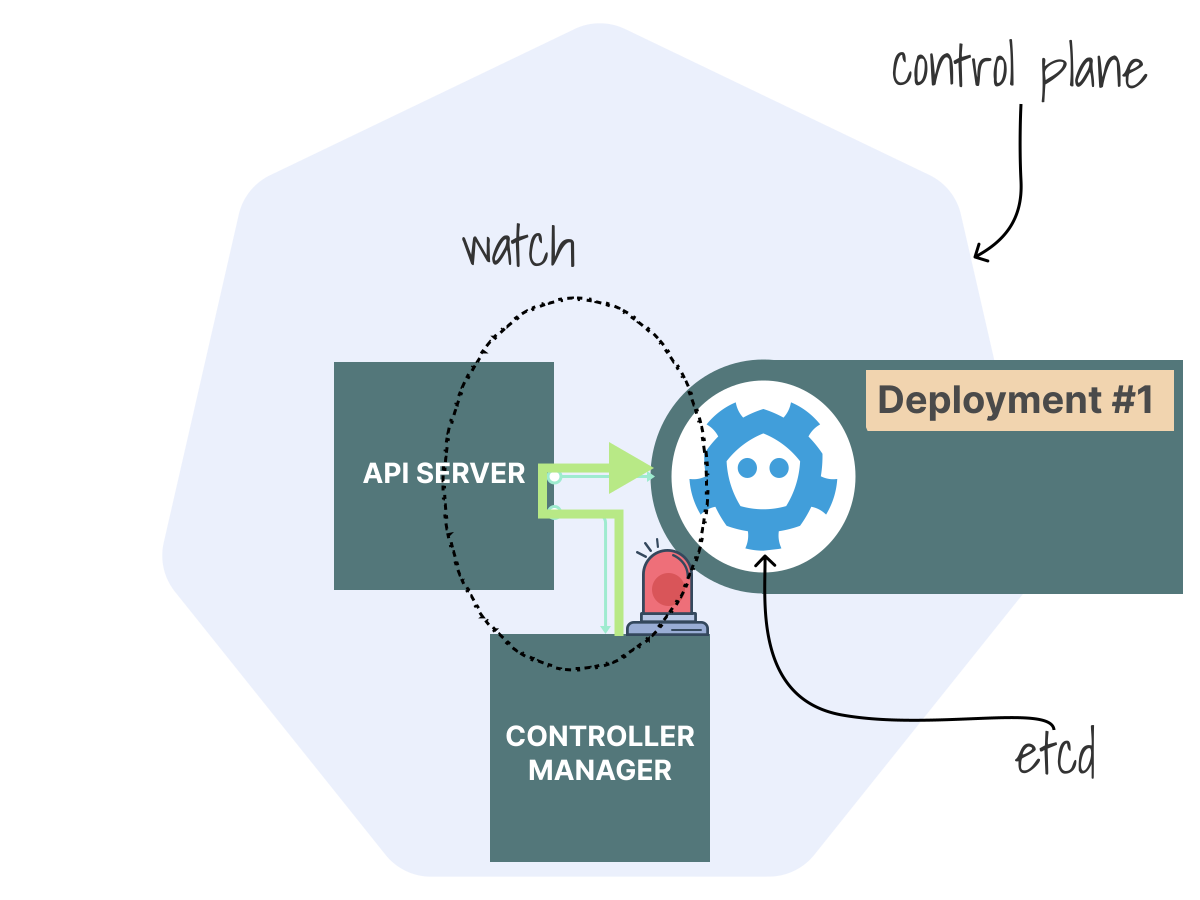
The API server demultiplexes watches: it opens a single watch per resource type to etcd, then fans out the events to all the clients that are interested.
If you have 200 controllers watching pods, etcd still only serves one watch stream for pods and the API server distributes events to the 200 clients.
This means that the number of controllers and operators you run has very little impact on etcd itself.
The fan-out cost is paid by the API server, not by etcd's leader.
Watch events are also distributed outside of Raft consensus: they don't go through the leader's replication path.
Instead they're streamed directly from whichever etcd node the API server is connected to.
So where does the watch cost actually land?
On the API server, again.
With thousands of watchers, the API server has to serialize and send events to each client individually.
How the API server uses etcd
The API server is the only component that talks to etcd, and how it does so directly affects the load etcd has to handle.
Let's observe this with an example.
What happens when you run kubectl get pods?
The API server must return all pods in the cluster.
Here's what happens when you make that request:
- The API server sends a range request to etcd over gRPC.
- etcd reads the keys from its bbolt database on disk.
- etcd serializes the data as protobuf and sends it back over gRPC.
- The API server receives the protobuf payload and decodes it into internal Go objects.
- The API server re-encodes those objects into the format the client requested (usually JSON) and writes the response.
Each step allocates memory, and the cost is split:
- etcd has to read from disk and serialize the response (steps 2 and 3).
- The API server has to decode and re-encode it (steps 4 and 5).
If you have 1 GB of pod data in etcd, a single request like this can use about 5 GB of memory across the whole process.
Both etcd and the API server have to handle this memory load.
In a small cluster with a few hundred pods, this usually isn't a problem.
But a controller that lists all 150,000 pods in a large cluster, or a CRD operator that fetches 500 MB of custom resources every few seconds, turns a routine read into gigabytes of memory pressure on both sides.
That's just for reads.
Writes have a similar problem with memory use.
When a controller updates an object, the API server sends the write to etcd, etcd replicates it through Raft, and a new MVCC revision is created.
But controllers don't just write once and stop.
They use optimistic concurrency: read the object, modify it, write it back with the current resourceVersion.
If another controller updated the same object in the meantime, the write fails, and the controller has to retry.
In a busy cluster with many controllers working on the same objects, a single update can lead to several rounds of reads and writes.
Each of these writes creates a new revision in etcd, adds to the Raft log, and increases compaction pressure.
The API server's clients generate all this write traffic, and etcd has to handle it.
What breaks at scale
Raft consensus, single-file storage, MVCC revisions, and the API server's request handling: all reasonable trade-offs for a metadata store, but they compound:
- Quota alarms: the database fills up, goes read-only, and the control plane freezes. You have to manually compact, defragment, and clear the alarm before Kubernetes can accept writes again.
- Compaction lag: if the mutation rate is high enough, compaction runs can't keep up. The database grows faster than it shrinks, and you're on a slow path to a quota alarm.
- Snapshot pressure: if the database is large and a follower falls behind, the leader has to send a multi-gigabyte snapshot. During that transfer, the leader has less capacity for normal operations.
- API server memory spikes: a controller that lists large amounts of data triggers memory amplification, even when etcd itself is fine.
But it's important to put this in perspective.
Google tested 30,000-node GKE clusters on very old etcd v3.4 on previous-generation hardware, and it worked.
etcd was not the bottleneck.
The bottlenecks were in other parts of the control plane: the API server, the scheduler, and how clients interacted with the API.
The recent jumps in Kubernetes scalability from cloud providers are the result of years of work on the control plane itself, not just the storage layer.
For most Kubernetes clusters, none of this is a problem: etcd and the API server can handle the load just fine.
But you don't need 10,000 nodes before problems can appear.
A cluster with just a hundred nodes and a controller that watches everything, or an operator that stores 500 MB of custom resources and lists them every few seconds, can run into the same issues.
In fact, resource size matters more than node count.
Kubernetes scalability tests use 4 KB pods, but real-world pods are often 10-100 KB.
A cluster with as few as 50 nodes can become unstable if pods are large enough — even though Kubernetes officially supports 5,000 nodes.
What really matters is how much data moves through the control plane, not just how many nodes you have.
Sharding etcd
In a default Kubernetes setup, every resource type shares a single etcd cluster.
Pods, deployments, configmaps, secrets, events, leases, and custom resources all write to the same Raft log, the same bbolt file, the same leader.
Not all resources behave the same way:
- Some are quiet: you create a secret once and rarely touch it.
- Others are noisy: pods report status updates constantly, and the kubelet generates events for every lifecycle change.
Let's take Events as an example.
In a busy cluster, the event stream can generate hundreds of writes per second, and those writes compete with deployment rollouts and config map updates for the same Raft leader.
The API server has a flag for this: --etcd-servers-overrides lets you point specific resource types at separate etcd clusters.
bash
kube-apiserver \
  --etcd-servers=https://etcd-main-1:2379,https://etcd-main-2:2379,https://etcd-main-3:2379 \
  --etcd-servers-overrides="/events#https://etcd-events-1:2379;https://etcd-events-2:2379"
The format is group/resource#server1;server2.
For core resources like events, pods, and services, the API group is empty, so you write /events, /pods, or /services.
For resources in other API groups, you include the group: apps/deployments or coordination.k8s.io/leases.
Now, events are written to a separate Raft log, a separate bbolt file, and a separate leader and Event churn no longer competes with deployment rollouts for resources.
You can shard any built-in resource this way.
Placing events on a separate cluster is the most common approach.
What are the trade-offs?
- Backup complexity increases. You now have multiple etcd clusters to snapshot and restore. A consistent restore means all shards need to be at the same point in time.
- Resource versions are not comparable across shards. Each etcd cluster has its own revision counter. A
resourceVersionfrom the events shard means nothing in the context of the main shard. (Kubernetes 1.35 addresses this with Comparable Resource Version, now GA.) - Only built-in resources. The flag only works for resources compiled into the API server binary, not CRDs or resources served by aggregated API servers.
Going the other direction: sharing one etcd
For very small clusters, the opposite problem applies.
Running a dedicated 3-node etcd cluster per API server is expensive when you only have a handful of nodes.
Multiple API servers can share one etcd cluster by using different key prefixes:
bash
# Cluster A
kube-apiserver --etcd-prefix=/cluster-a/registry ...

# Cluster B
kube-apiserver --etcd-prefix=/cluster-b/registry ...
The default prefix is /registry.
All Kubernetes keys are stored under it: /registry/pods/default/my-pod, /registry/services/specs/default/my-service, and so on.
With different prefixes, each cluster's data lives in its own keyspace.
/cluster-a/registry/pods/... and /cluster-b/registry/pods/... don't collide.
This reduces operational overhead at the cost of shared resources: both clusters' writes go through the same Raft leader, and the bbolt file holds both clusters' data.
For edge deployments and dev environments, this trade-off is often worthwhile.
Replacing etcd: Kine and k3s
The first project to seriously question the etcd dependency was k3s, Rancher's lightweight Kubernetes distribution.
K3s needed to run on edge hardware, IoT devices, and single-node setups where operating a three-node etcd cluster was impractical.
But how can you remove etcd from Kubernetes when the API server is built to communicate with it?
The answer was Kine ("Kine is not etcd").
Kine is a shim that implements a subset of the etcd API and translates requests to a relational database: SQLite, PostgreSQL, MySQL/MariaDB, or NATS.
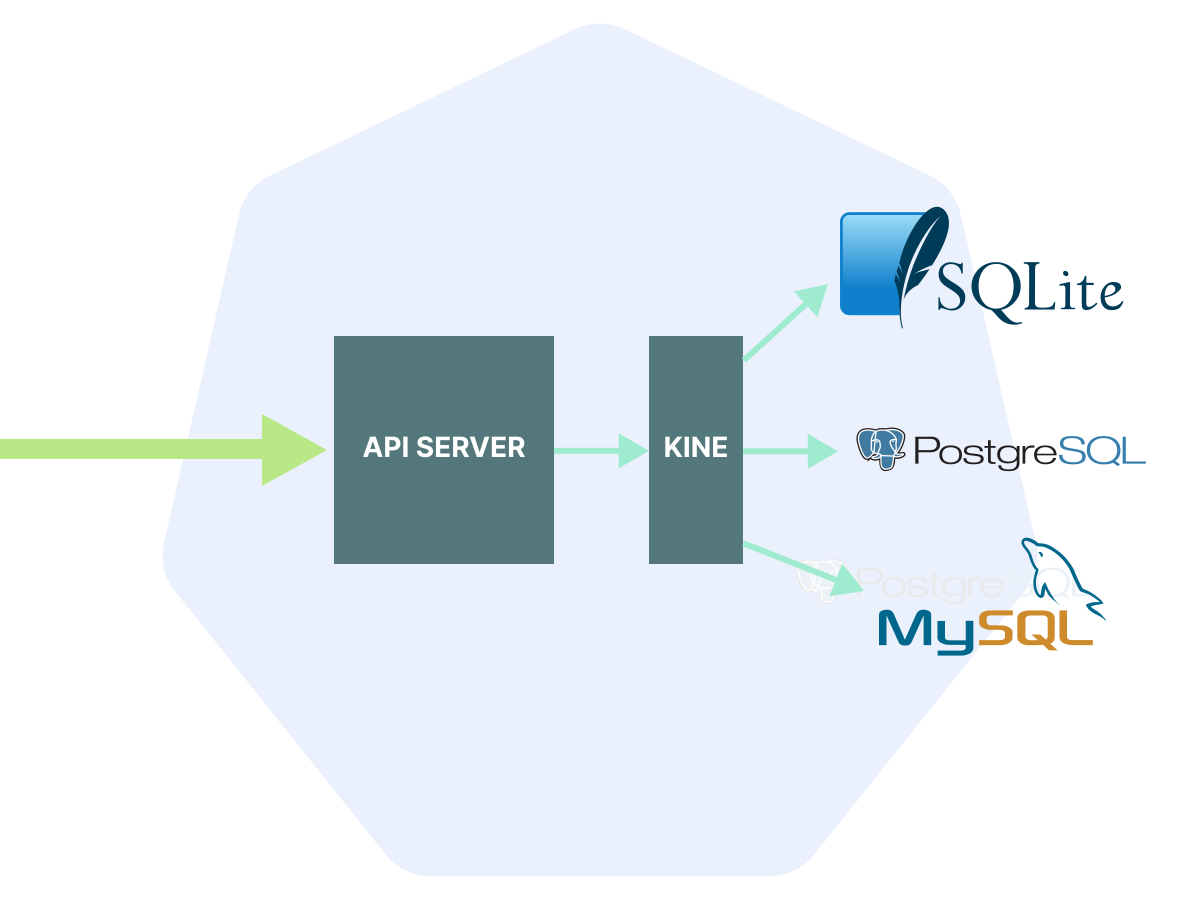
The key insight: the Kubernetes API server doesn't talk to etcd's internals, it talks to the etcd gRPC API.
If you implement that API in front of a different database, the API server doesn't know the difference.
Kine only implements a subset of the etcd API, though.
It covers the access patterns Kubernetes actually uses, but it's not a general-purpose etcd replacement.
And you lose some of etcd's properties:
- Watch efficiency depends on how the backend implements polling.
- Revision semantics are approximated, not native.
For edge deployments and small clusters, this is a perfectly reasonable trade-off.
But the bigger insight is the pattern: you can decouple Kubernetes from etcd by reimplementing the etcd API, without touching Kubernetes itself.
That's exactly what the hyperscale cloud providers did, but at a very different scale.
What the hyperscalers built
In 2025, AWS announced support for clusters with up to 100,000 worker nodes.
At that scale, the cloud providers had the resources and motivation to rethink the storage layer entirely.
In their technical deep dive, AWS describes what they rebuilt:
- They replaced Raft consensus with an internal journal service.
- They replaced the bbolt backend with an in-memory design.
- They partitioned the keyspace so different key ranges can be handled by different nodes.
The key change was eliminating the single-leader bottleneck.
AWS describes journal as a service that provides "ultra-fast, ordered data replication": offloading consensus to journal let them scale etcd replicas without being bound by a quorum requirement and eliminated peer-to-peer communication entirely.
This is a fundamentally different architecture, not just a bigger etcd.
But they kept the etcd API.
Why did they do this?
Because the alternative is worse.
The Kubernetes API server's storage layer is defined in k8s.io/apiserver/pkg/storage/interfaces.go, and that interface is built on top of etcd's model: revision-based operations, watch semantics, and prefix queries.
Changing that interface means forking the API server, and maintaining a fork of Kubernetes is an enormous ongoing cost.
It's cheaper to rewrite etcd than to rewrite Kubernetes.
So AWS did what Kine did, but at a different scale: they built a new storage engine that speaks the etcd API, and plugged it in where etcd used to be.
Google took a different approach to the same problem.
When they announced 65,000-node GKE clusters, they described replacing open-source etcd with a Spanner-based key-value backend that implements the etcd API.
Spanner is Google's globally distributed database.
It uses Paxos for consensus and TrueTime (backed by atomic clocks and GPS receivers) for globally consistent timestamp ordering.
This gives it scaling properties that etcd can't match: no single-file size limit, and a distributed architecture designed for the kind of throughput a 100k+ node cluster demands.
They later pushed this to 130,000 nodes using the same approach.
But even with Spanner as the backend, Google still lists strict constraints for clusters of this size: no cluster autoscaler, headless services limited to 100 pods, and one pod per node.
Why is that?
Because the storage layer is only one bottleneck.
Replacing etcd with Spanner fixes the database ceiling, but the API server still has to serialize every object, evaluate admission controllers, and distribute watch events.
The scheduler processes pods one at a time, the kubelet reports status updates, and the network has bandwidth limits.
An infinitely scalable database doesn't make the rest of the system infinitely scalable.
That's why 130,000-node clusters come with restrictions that smaller clusters don't.
Why upstream Kubernetes is still coupled to etcd
If Kine, EKS, and GKE all managed to swap the backend, why can't upstream Kubernetes just make storage pluggable?
Here's what the API server's storage interface actually looks like (trimmed for readability):
interfaces.go
type Interface interface {
    Versioner() Versioner

    Create(ctx context.Context, key string, obj, out runtime.Object, ttl uint64) error

    Delete(ctx context.Context, key string, out runtime.Object,
        preconditions *Preconditions, validateDeletion ValidateObjectFunc,
        cachedExistingObject runtime.Object, opts DeleteOptions) error

    Watch(ctx context.Context, key string, opts ListOptions) (watch.Interface, error)

    Get(ctx context.Context, key string, opts GetOptions, objPtr runtime.Object) error

    GetList(ctx context.Context, key string, opts ListOptions, listObj runtime.Object) error

    GuaranteedUpdate(ctx context.Context, key string, destination runtime.Object,
        ignoreNotFound bool, preconditions *Preconditions,
        tryUpdate UpdateFunc, cachedExistingObject runtime.Object) error

    // TODO: Remove when storage.Interface will be separate from etc3.store.
    // Deprecated: Added temporarily to simplify exposing RequestProgress for watch cache.
    RequestWatchProgress(ctx context.Context) error

    GetCurrentResourceVersion(ctx context.Context) (uint64, error)

    CompactRevision() int64
}
Every operation is revision-aware:
Watchtakes aresourceVersionto resume from.GetListreturns objects with their revision.GuaranteedUpdateuses a compare-and-swap based on the current revision.CompactRevisionexposes etcd's compaction state directly.
The interface was designed for etcd. It works as an abstraction, but it's an etcd-shaped one.
But it's not just about code:
- kubeadm bootstraps etcd.
- Backup tools target etcd snapshots.
- Monitoring dashboards track etcd metrics.
- Runbooks describe etcd recovery procedures.
Changing the storage backend isn't just a code change.
The entire ecosystem needs to support the change.
So how did the cloud providers work around this?
They own the full stack, and they compile their own API server binaries, wire in their own storage implementations, and run their own conformance suites.
For everyone running upstream Kubernetes, etcd is the only supported backend.
How Kubernetes is reducing the load on etcd
Every read through the pipeline described above costs both sides: etcd reads from disk and serializes, the API server decodes and re-encodes.
The API server has been taking over most of that work.
Instead of forwarding every read to etcd, it maintains its own copy of cluster state and serves from memory: the watch cache.
The API server populates this cache by watching etcd for changes: every create, update, and delete stream is a watch event, and the cache applies it.
The data sits in memory as already-decoded Go objects.
When the cache serves a read, the entire etcd side of the pipeline disappears: etcd doesn't touch disk, doesn't serialize anything, doesn't send data over gRPC.
The API server already has decoded objects in memory and only needs to encode the response for the client.
The challenge is proving freshness.
A default list request (resourceVersion="") means "give me the most recent data", and the API server can't risk serving stale results.
How does it know its cache is current?
It asks etcd for a single number: the current revision.
Once the API server knows the latest revision, it waits for the watch cache to catch up to that number, then serves from memory.
The consistency guarantees are the same as for a direct etcd read, but only a revision number is sent across the wire rather than megabytes of serialized data.
But some requests don't ask for the latest state; instead, they ask for data at a specific resourceVersion, for example, when a controller resumes a watch or retries a paginated list.
The API server needs to answer: "What did the world look like at revision 42?"
etcd can answer this natively: its MVCC history stores old revisions.
But serving them still requires the full round-trip through disk, serialization, gRPC, and decoding.
The watch cache avoids that round-trip by keeping its own history.
It stores data in a B-tree that supports efficient snapshotting.
On each incoming watch event, it saves a point-in-time copy of its state before applying the change.
This gives it a sliding window of historical states, retained for about 75 seconds.
When a client requests a specific resourceVersion, the API server looks up the matching snapshot and serves it directly from cache, as if it were a fresh read.
If the snapshot has been cleaned up (the requested revision is older than 75 seconds), the request falls back to etcd.
But even when serving from cache, the API server still has one remaining cost: encoding the response.
The in-memory Go objects need to be serialized into JSON or Protobuf before they are sent to the client.
The standard approach is to encode the entire list into a single memory buffer and write it to the network.
For a cluster with 50,000 pods, this encoding step alone allocates hundreds of megabytes on top of the data already in cache.
The API server encodes list responses as a stream instead: it serializes and flushes objects one at a time rather than buffering the full response.
The memory footprint drops from the size of the entire list to the size of a single object.
This watch cache pattern has been so effective that it's being extracted from Kubernetes into a standalone etcd caching library (go.etcd.io/cache).
The goal is to make the same caching model available to other projects that build on etcd (like Cilium and Calico) without forcing them to reimplement it from scratch.
So, does Kubernetes still need etcd?
After all this, what is the practical answer?
If you're running upstream Kubernetes, yes. etcd is the only supported storage backend, and the API server is deeply coupled to its semantics. That won't change anytime soon.
If you're running a managed service like GKE or EKS, the provider may have already replaced etcd's internals with something that scales further. You're using Kubernetes without being limited by etcd's ceilings.
If you're running k3s or similar distributions, Kine gives you the option to swap etcd for a relational database, with the understanding that it's a subset implementation.
For most clusters, none of this matters. etcd handles the load just fine.
When it does matter, keep in mind that etcd is rarely the first bottleneck.
The API server, scheduler, and how clients interact with the API are usually where problems appear first.
When you do hit limits, the options are: shard etcd for the quick win, swap the backend with Kine, or wait for the API server to get smarter about caching with each release — which, as the recent improvements show, is where most of the scalability gains are coming from.