Join the next online Kubernetes course
When:
28th and 29th of October 2027
For popular courses like this one, we run multiple classrooms with different starting times.
You can join the session that works best for you.First classroom starts at
🇺🇸 San Francisco 8:00 AM 🇺🇸 New York 11:00 AM 🇬🇧 London 4:00 PM Second classroom starts at
🇺🇸 New York 8:00 AM 🇬🇧 London, UK 1:00 PM 🇸🇬 Singapore 8:00 PM Where:
Online
Duration:
2 days / 6 hours per day
Price:
USD 1,499.00
Send the course details to your inbox →
Get the agenda, price, and booking link for this cohort.
*We'll never share your email address.
How does this Kubernetes course work?
This is a full-time, 2 days course on learning and mastering Kubernetes.
Things you need to know about the course:
- This is an online event. We use Google Meet for video conferencing and Slack to chat.
- Engaging learning, which is 40% lecture and 60% hands-on lab-based. You will get practical knowledge, not just bland theory.
- We teach small groups so that you can ask questions and dig into the concepts — everyone has the chance to take part and deep dive into the concepts.
- The event is streamed using Google Meet and we use Slack to chat.
- You will have access to all the material even after completing the training.
- It's beginner-friendly, but you will learn some pretty advanced topics too.
On this course, there'll be:
- No death by PowerPoint. Yes, there are slides, but the content is immersive, relevant and hands-on, applied to real-life scenarios.
- No boredom central. You won't be passively listening to the instructors; you'll need to answer questions and get actively involved in the sessions.
- No pushy sales guys. We are vendor-neutral, with no interest in "selling" or suggesting a particular vendor. We're unbiased and will only recommend tools that we know will work for you.
What does the Kubernetes course cover?
A typical schedule for a 2 day course is as follows:
Day 1
Lecture + hands-on labs + challenges
Kubernetes doesn't know how to deploy apps written in languages such as Java, Node.js, or .NET. Instead, it only understands and uses Linux containers. But how do these Linux containers work? Are those strictly necessary to master Kubernetes? In this course, you will familiarise yourself with containers and Docker.
Containers vs VMs
Understanding process isolation
Is Docker the only one?
Docker client-server architecture
Running containers
Building Docker images
Mounting volumes
Exposing ports
Managing containers lifecycle
Injecting environment variables
Debugging running containers
Lecture + hands-on labs + challenges
In this course, you will learn how to build, deploy and scale your application in a Kubernetes cluster. You will also learn how to expose your app to the internet and architect apps that are designed to be horizontally scalable.
Managing containers at scale
The battle of container orchestrators
Visualising the data centre as a single VM
The scheduler is the best Tetris player
Kubernetes as an infrastructure as a service provider
What are Pods, Services, and Ingresses?
Creating a local cluster with minikube
Creating a Deployment
Exposing Deployments
What is a Pod?
Scaling applications
Testing resiliency
Lecture + hands-on labs + challenges
Every time you deploy new features in production, you shouldn't stop your app, change the version and start it again. With zero-downtime deployments, no one notices any glitch while you're upgrading your apps. How does that work in Kubernetes? In this course, you will learn how Services work in Kubernetes and how you can roll out changes with zero downtime using rolling updates. You will also learn about Canary Deployments and Blue-green deployments.
Monitoring for uptime
Liveness probe
Readiness probe
Startup probe
Executing zero downtime deployments with rolling updates
Using labels and selectors
Testing features with canary deployments
Releasing features with blue-green deployments
Understanding rollbacks and ReplicaSets
Day 2
Lecture + hands-on labs
Resources in Kubernetes are described as YAML files. If you wish to have the same resources for different environments such as development, preproduction and production, you may be tempted to copy the files three times. Or you could use a templating engine. In this course, you will learn how to do that with Helm, Kustomize or with your programs in any language.
Creating reusable templates
Helm's templating engine
Understanding the Helm architecture
Templating resources with Go and Sprig
Managing releases with Helm
Reverting changes with rollbacks
Depending on other charts
Storing reusable templates in repositories
Structured templating introduction with YQ
Kubernetes specific structured templating with Kustomize
Using Kubernetes SDKs for templating
Lecture + hands-on labs
Can Kubernetes recover from failures? In this course, you will learn the Kubernetes core components by building a cluster from scratch using kubeadm. But the best way to learn something is by breaking it. So you will also break the cluster one node at the time and observe what happens.
Single and multi-node clusters
Examining the control plane
Persisting changes in etcd
Syncing changes with RAFT
Event-based architecture
Understanding the kubelet
Verifying "no single point of failure"
Setting up a multi-master cluster
Investigating multi-master setup in EKS
Exploring multi-master setup in Monzo
Creating a 3 node cluster with kubeadm
Installing an overlay network
Installing an Ingress controller
Exploring the API without kubectl
Taking down the cluster one node at a time
What's included in the Kubernetes course?
- Lifetime access to the online material.
- All the slide decks.
- A virtual workstation in the cloud for each delegate for the duration of the course.
- Lifetime access to the private Slack channel where you can always ask for help.
- A certificate of completion signed by the instructor.
What are the prerequisites for the Kubernetes course?
- Knowledge of basic Linux commands and navigation.
- Familiarity with Linux networking.
- Some experience with reverse proxies such as Nginx or HAProxy.
- Exposure to Virtual Machines.
- A laptop with 8GB of memory and 20GB of space available.
- Windows, macOS, Ubuntu (or your favourite Linux distribution).
Who are the LearnKube instructors?


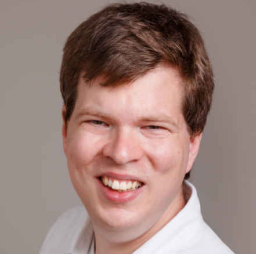



We are Kubernetes practitioners with experience in:
- Software engineering
- MLOps and data pipelines
- System administration and infrastructure
We were also selected to speak at KubeCon — the world's largest Kubernetes and Cloud-Native conference. You can watch the tech talks here:
- Designing Kubernetes clusters that run on embedded devices — Daniele
- Boosting your kubectl productivity — Salaboy
- How we migrated our monolith to Kubernetes — Salaboy
- Scaling ML pipelines with KALE — Salman
- 7 tips to enjoy your Kubernetes journey — Daniele
You can chat with us on the LearnKube's Telegram Group!
Why LearnKube
LearnKube has been delivering Kubernetes training since 2017.
We have worked with hundreds of teams across different industries, cluster sizes, and maturity levels.
This experience gives us a wide view of what often goes wrong in production and what teams usually miss before making changes.
During the course, we use that production experience to explain Kubernetes through practical tradeoffs, common failure modes, and the decisions engineers actually face.
Companies trusting LearnKube training include
What happens after I buy the ticket for the course?
- An instructor will get in touch with you.
- You will receive a list of tools that you should install ahead of the event.
- You will be granted access to the LearnKube Academy (the online learning platform).
- We will keep you informed (and send gentle reminders) until the day of the event.
What students say after the course
Students share their experience of the course.
"The instructor Salman was very knowledgable and engaged, and made sure to cover specific topics that were relevant to our expectations from what we would learn from the course."
- Isaac, GIS Developer at EIFER
"The online training material, documentation and presentations are very well done!"
- Andreas, Director of Engineering at Autodesk
"Its going to be immense to absorb, do as much as you can, no one knows everything"
- Mohammed, DevOps engineer at Hotspex Media
"I wish the class lasted 5 days and all learning topics had a lab."
- Brandon, Product Manager of DevSecOps at Sabel Systems
"I really enjoyed the challenges at the end of the first 3 lessons as they really had the concepts start to make sense and allow me to follow and learn at my own pace."
- James, Systems Specialist at Sabel Systems
"It was the most comprehensive course I have ever taken. It made me feel like I am ready to use Kubernetes immediately."
- Simon, Software engineer at Tromero
"The technical depth of demos and deep-dive explanations - so much better than any of the many online on-demand classes I've taken."
- Dana, Staff Systems & Infrastructure engineer at Walmart
"Greg was just awesome and very knowledgable. I also love that the course material remains available afterwards, and that we keep access to the Slack channel."
- Aaron, DevOps Engineer at RIPE NCC
"Labs, the labs were fantastic."
- Paul, Infrastructure Automation Guild Lead at Research Innovations
Join the next online Kubernetes course
When:
28th and 29th of October 2027
For popular courses like this one, we run multiple classrooms with different starting times.
You can join the session that works best for you.First classroom starts at
🇺🇸 San Francisco 8:00 AM 🇺🇸 New York 11:00 AM 🇬🇧 London 4:00 PM Second classroom starts at
🇺🇸 New York 8:00 AM 🇬🇧 London, UK 1:00 PM 🇸🇬 Singapore 8:00 PM Where:
Online
Duration:
2 days / 6 hours per day
Price:
USD 1,499.00
Send the course details to your inbox →
Get the agenda, price, and booking link for this cohort.
*We'll never share your email address.
The LearnKube guarantee: our promise to you
We care more about our students' success than taking their money.
If you follow the lectures and practise the material (without being distracted by your day to day duties) and still DO NOT feel like you made any progress, we'll give you a full refund.
We're honest to the end about the level of effort, skills, and other ingredients required.
This is not a watch someone else presenting a PowerPoint and become an expert type of course. The learning curve is steep; then, the plateau of usefulness is very long and smooth. It's a great feeling operating Kubernetes after you've mastered it.
Frequently asked questions
Who is this workshop for?
Software developers, platform engineers, SREs, DevOps engineers, data engineers, and architects seeking to learn how to use Kubernetes to automate deployment, scaling and management of containerised applications.
Are there any joining instructions?
You will receive the joining instructions with all the material needed to run the course after you sign up for the course.
What if I'm not thrilled?
We want to make sure you get real value out of this so we only want your money if you are happy with the product! If you aren't satisfied, please send an email to hello@learnkube.com with a copy of your receipt and I will refund you.
Do you offer private training for teams?
Yes. If you need to train several engineers, we can deliver the course privately and adapt it to your platform, workloads, and goals. See private Kubernetes training for teams.
I have another question!
Sure - send an email to hello@learnkube.com.